Loading...
The paperless conference system, as an emerging mode of office work, has gradually gained increasing attention. This article explains its purpose and how to implement it.

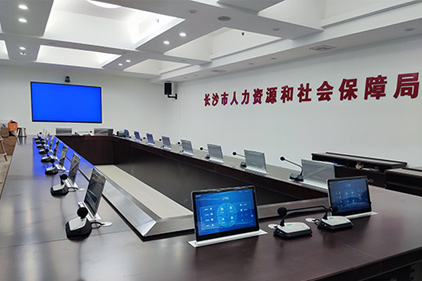
The paperless conference interactive system is part of modern communication, audio, video, and software technologies, enabling paperless meetings through electronic document exchange. Its features include networked file transmission, electronic document display, intelligent editing, and controllable document input and output. Intelligent terminals function like independent standard computers, allowing each participant to independently display content publicly with a one-touch switch, either synchronously or asynchronously.
Resource Conservation
Paper is a non-renewable resource, and its production generates significant CO₂ emissions. Implementing a paperless conference system reduces paper usage and thus lessens environmental impact. Additionally, paper documents are prone to damage, causing waste. The paperless conference system avoids these issues and improves resource efficiency.
Improved Work Efficiency
The system allows participants to join meetings via the internet from anywhere, without being limited by time or location. Participants can engage at their own pace without delays caused by others or meeting room conditions. Furthermore, the system supports multiple file formats, facilitating easy access to and sharing of materials.
Ensured Information Security
Paper documents are easily lost, intercepted, or leaked, causing serious losses to enterprises. The paperless conference system uses encryption technology to secure data transmission. File storage permissions can be set to prevent unauthorized access, effectively safeguarding corporate information.
Convenient Organization and Retrieval
Paper documents occupy substantial space and make quick retrieval difficult. The paperless conference system categorizes and manages files using keywords and tags, enabling rapid searches. Additionally, meeting records can be saved in real time for convenient future reference and analysis.

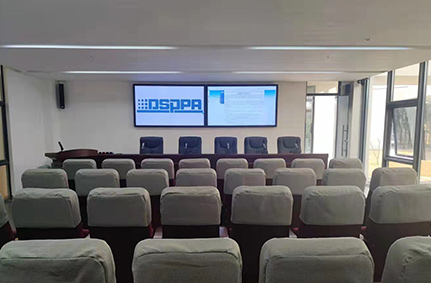
The paperless conference system encompasses hardware such as audio systems, video systems, conference systems, paperless conference interactive software, meeting service and auxiliary software, motorized or flip-up screens at each seat, projection systems or video walls for public display, network switches, control systems, video players, and video matrices commonly required in conference rooms.
Selecting Appropriate Hardware
To implement the system, selecting the right hardware is essential. Typically, this includes video conferencing terminals, microphones, cameras, and audio equipment. These devices must offer high-definition video, excellent sound quality, and stable network connectivity to ensure meeting quality.
Building the Network Platform
A robust network is critical. Enterprises need to choose a suitable cloud service provider to build a dedicated conference network platform. The platform must be fast, stable, and secure to support large-scale meetings.
Developing Paperless Conference Software
To realize the system's functionality, enterprises need software such as video conferencing apps, document sharing tools, and screen sharing software. The software should feature a user-friendly interface for easy adoption by participants.
Training Participants
For smooth operation, training users is necessary. Training covers hardware use, software operation, and best practices in network environments. Through training, participants adapt better to the paperless conference workflow.
Continuous Optimization and Improvement
Implementing a paperless conference system is an ongoing process. Enterprises should continuously update hardware, optimize network conditions, and upgrade software functionalities. Continuous improvement ensures the system meets evolving business needs effectively.