Loading...
A paperless conference system is no longer a “nice-to-have” add-on for modern meeting rooms. For government agencies, enterprises, and institutions that run frequent meetings, paper-heavy workflows create recurring pain points: last-minute printing, version confusion, poor attendance tracking, slow voting, and limited post-meeting traceability. A well-designed paperless solution replaces these friction points with digital agendas, file distribution, check-in, voting, synchronized content viewing, and centralized management—while reducing printing and projection costs.
DSPPA’s paperless conference system positions itself as an integrated solution combining communication, audiovisual control, and software technology with diversified functions, resource pooling, standardized management, and stable operation—exactly what decision-makers need when upgrading conference rooms at scale.

A paperless conference system is a digital meeting platform that typically includes:
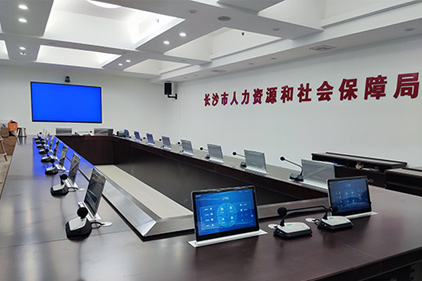
Per-seat conference terminals (desktop or motorized lift monitors, sometimes with microphones and nameplates)
Back-end management software for meeting creation, permissions, content distribution, and logging
Networking + control infrastructure to support synchronized viewing, interactive content, and centralized supervision
Instead of printing physical binders, organizers upload materials once and distribute them to all participants instantly. Attendees can view documents, annotate, and follow the presenter with synchronized screens. Meanwhile, administrators monitor attendance and vote results in real time.
When comparing systems, focus on features that directly drive ROI:
Meeting material distribution + version control
A strong system supports fast upload, permission-based distribution, and real-time updates so everyone sees the latest file set.
Check-in and attendance reporting
Digital sign-in reduces manual errors and creates audit-friendly attendance records—especially important for formal meetings.
Voting & polling (with fast result output)
On-screen voting shortens decision cycles and reduces disputes by providing structured results and logs.
Synchronized viewing / co-screen
Presenters can keep all participants aligned on the same page or slide to reduce confusion and accelerate discussion.
Stability and ease of operation
In real-world deployments, “simple, intuitive, and stable” matters more than fancy features. DSPPA explicitly emphasizes intuitive interfaces and steady operation as core value. Many organizations also rely on a digital conference recording system to improve meeting documentation and long-term record management.
| Dimension | Traditional meeting | Paperless conference system |
|---|---|---|
| Preparation | Printing & manual distribution | Upload once, distribute instantly |
| Updates | Reprint and resend | Real-time updates |
| Attendance | Manual sign-in sheets | Digital check-in logs |
| Voting | Paper ballots or hands | On-screen voting & reporting |
| After-meeting | Hard to trace decisions | Records, logs, and stored materials |
A major advantage of DSPPA’s approach is that the system can be composed of various terminals for “personalized collocations” (configurations). (dsppacs.com)
To choose correctly, answer:
Room size & seat count: 10–20? 50–100? Multiple rooms?
Terminal type: desktop terminals vs. motorized lift terminals (space and aesthetics)
Audio integration: do you also need conference microphones, amplification, recording?
Workflow requirements: agenda + files only, or also voting, sign-in, and interactive sharing?
IT constraints: LAN-only? hybrid? centralized management across buildings?
A modern paperless conference system improves meeting efficiency by digitizing the entire workflow—from preparation to voting and post-meeting archiving. If your organization runs frequent high-stakes meetings, the fastest path to value is a stable, easy-to-operate platform with strong back-end management and flexible terminal options. DSPPA’s paperless conference system is built around those requirements: multifunction, standardized management, and reliable operation.
Q1: What does a paperless conference system do?
It digitizes meeting workflows such as file distribution, synchronized viewing, check-in, voting, and record keeping.
Q2: Is a paperless conference system suitable for government meetings?
Yes—many deployments focus on formal meetings requiring structured processes, permissions, and records.