Loading...
In the world of live performance, corporate presentations, and educational lectures, nothing kills the vibe faster than a crackling, dropping, or failing audio signal. As technology evolves in 2026, the demand for a reliable wireless microphone system has never been higher.
But with so many options—VHF, 2.4GHz, and UHF—which one should you trust for your venue? Whether you are designing a high-end conference room audio system or a live stage setup, choosing the right frequency is critical. In this guide, we’ll dive deep into why UHF wireless microphone systems remain the gold standard for professionals and how to select the perfect setup tailored to your specific communication needs.

While 2.4GHz systems are popular for hobbyists, professional environments require the stability of UHF (Ultra High Frequency). Here is why:
Superior Signal Penetration: UHF waves can pass through walls and human bodies more effectively than higher-frequency digital signals.
Less Interference: Unlike 2.4GHz, which competes with your Wi-Fi routers and Bluetooth devices, the UHF spectrum (typically 470–960 MHz) offers a cleaner "lane" for audio.
Longer Range: For large auditoriums or outdoor events, a UHF system can easily cover 100+ meters without losing clarity.
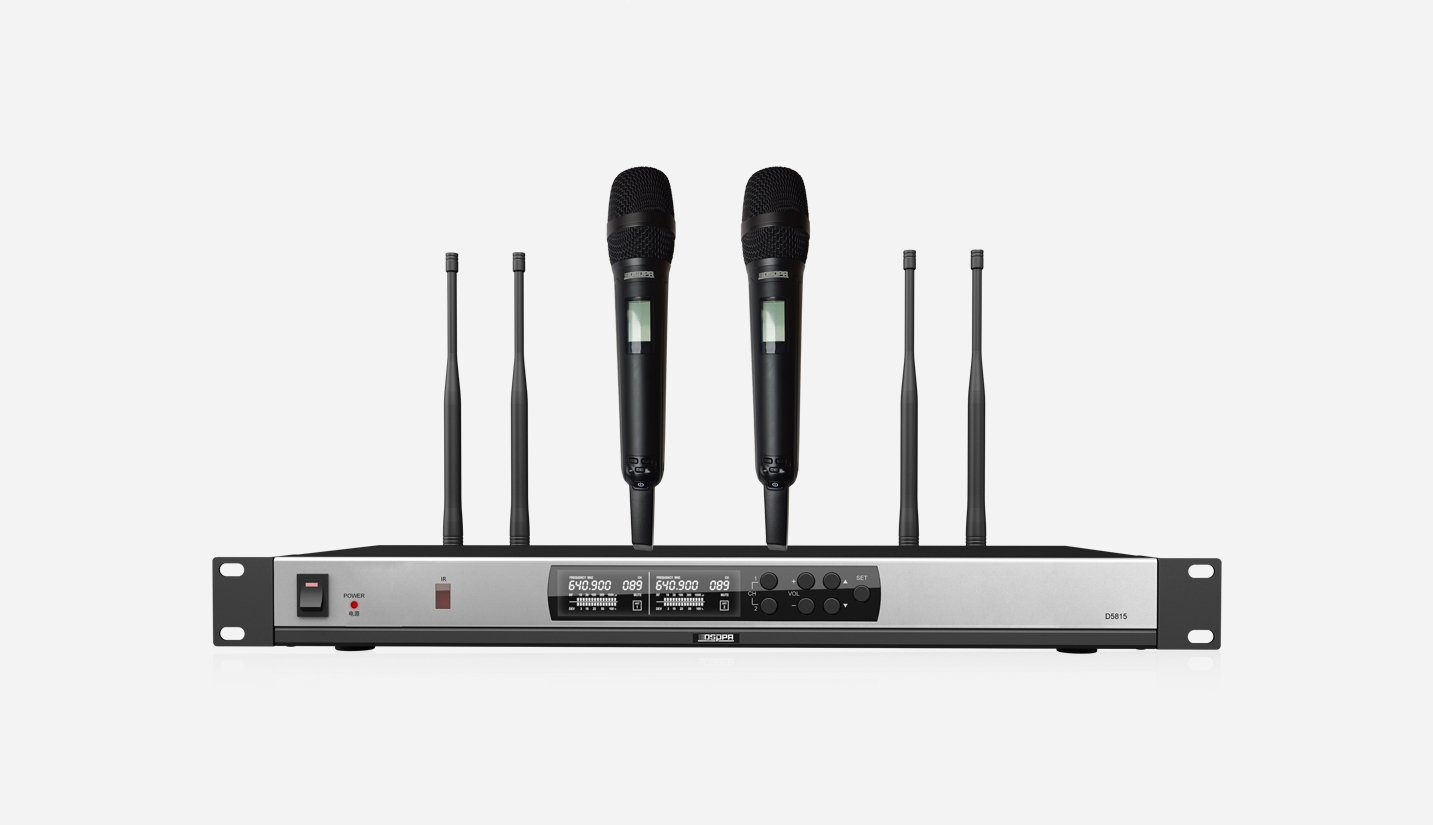
When browsing the DSPPA UHF Wireless Microphone series, keep these technical benchmarks in mind:
A "True Diversity" receiver uses two independent antennas and switching circuits. If one antenna experiences a "dead spot," the system instantly switches to the other, ensuring zero dropouts.
In modern cities, RF congestion is real. You need a system that offers hundreds of selectable frequencies. The ability to "scan and sync" automatically is a lifesaver for tech teams.
The Phase-Locked Loop (PLL) ensures that the frequency stays "locked" and doesn't drift due to temperature or battery levels, providing high-fidelity sound consistent from start to finish.
For pastors and choir directors, movement is key. A wireless lavalier or handheld system allows for dynamic preaching without being tethered to the pulpit.
Large university halls require systems that can handle multiple microphones simultaneously without crosstalk. DSPPA’s systems allow for cascading multiple units to cover even the largest campuses.
In a business setting, "plug and play" is the priority. Look for systems with IR (Infrared) synchronization that allow you to set up a professional audio environment in seconds.
As a leader in the audio industry, DSPPA has refined the UHF wireless microphone system to meet the rigorous demands of 2026. Our products, like the UHF Wireless Series, offer:
Exceptional Battery Life: Up to 8-10 hours of continuous use on a single charge.
Crystal Clear Audio: High S/N (Signal-to-Noise) ratio ensuring that the "hiss" common in cheap systems is non-existent.
Durable Build: Metal-chassis receivers designed for rack-mounting and long-term durability.
Expert Tip: When setting up your system, always maintain a clear "Line of Sight" between the transmitter and the receiver antennas for the best possible performance.
Q: Can I use two wireless microphones with one receiver?A: Yes, if you use a Dual-Channel Receiver. Each microphone will have its own dedicated frequency and volume control on the same unit.
Q: Is UHF legal in my country?A: Most UHF frequencies used by DSPPA are within international standards. However, we always recommend checking your local "white space" regulations to ensure you are using legal frequency bands.
Q: How do I prevent interference from LED screens?A: Large LED walls emit RF noise. Placing your antennas at a distance or using directional antennas can significantly improve your signal integrity.
Investing in a high-quality wireless microphone system is an investment in your message. Whether you are a performer, a teacher, or a business leader, don't let poor audio hold you back.
Ready to upgrade your sound?Explore our full range of professional audio solutions and find the perfect match for your venue.